Spending the winter in Spain means swapping cold, grey days for more sunshine, milder temperatures and the Spanish outdoor lifestyle. But Spain is a large country, and the differences between its regions can be considerable. So, where are the best places to spend the winter in Spain?
We take a closer look at five popular regions and what you can expect during the winter months. Whether you are planning an extended stay or considering buying your own property in Spain to enjoy the winter sunshine, this guide will help you find a location that suits your lifestyle.
What is winter like in Spain?
Spain has a remarkably varied climate. The green north tends to be cooler and wetter in winter, while temperatures in inland areas can drop considerably. Along much of the Mediterranean coast, however, winters are significantly milder. The Canary Islands offer even warmer conditions.
Of course, that doesn’t mean you can spend every winter day sitting outside in shorts. Even along the coast, January and February can bring chilly days and particularly cool evenings. However, many of Spain’s coastal regions enjoy plenty of sunshine, making it possible to spend much more time outdoors throughout the winter.
Want to know more about the differences between regions? Read our guide to the Climate in Spain.
What are the best places to spend the winter in Spain?
The ideal place to spend the winter depends largely on what you are looking for. If your priority is warmth, the Canary Islands are an obvious choice. If you prefer mainland Spain, the Costa Blanca, Costa Cálida and Costa del Sol are popular options.
Staying on the mainland also gives you more freedom to explore other cities and regions by car or train, which is particularly enjoyable during the cooler months. If you are looking for a mild climate combined with a lively city, culture and excellent amenities, the Valencia region is well worth considering.
The best places to spend the winter in Spain at a glance:
- Costa Blanca: mild and sunny · lively · plenty of amenities
- Costa Valencia: mild · city, culture and beach · plenty to do
- Costa del Sol: mild and sunny · international · golf and dining
- Costa Cálida: mild and dry · quieter · plenty of outdoor activities
- Canary Islands: the warmest option · nature and island life
Read more about each area below.
1. Costa Blanca
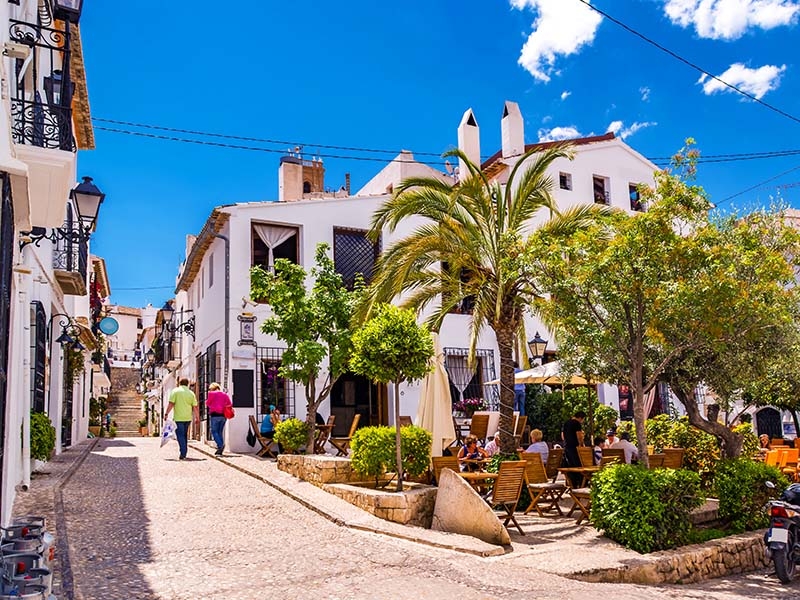
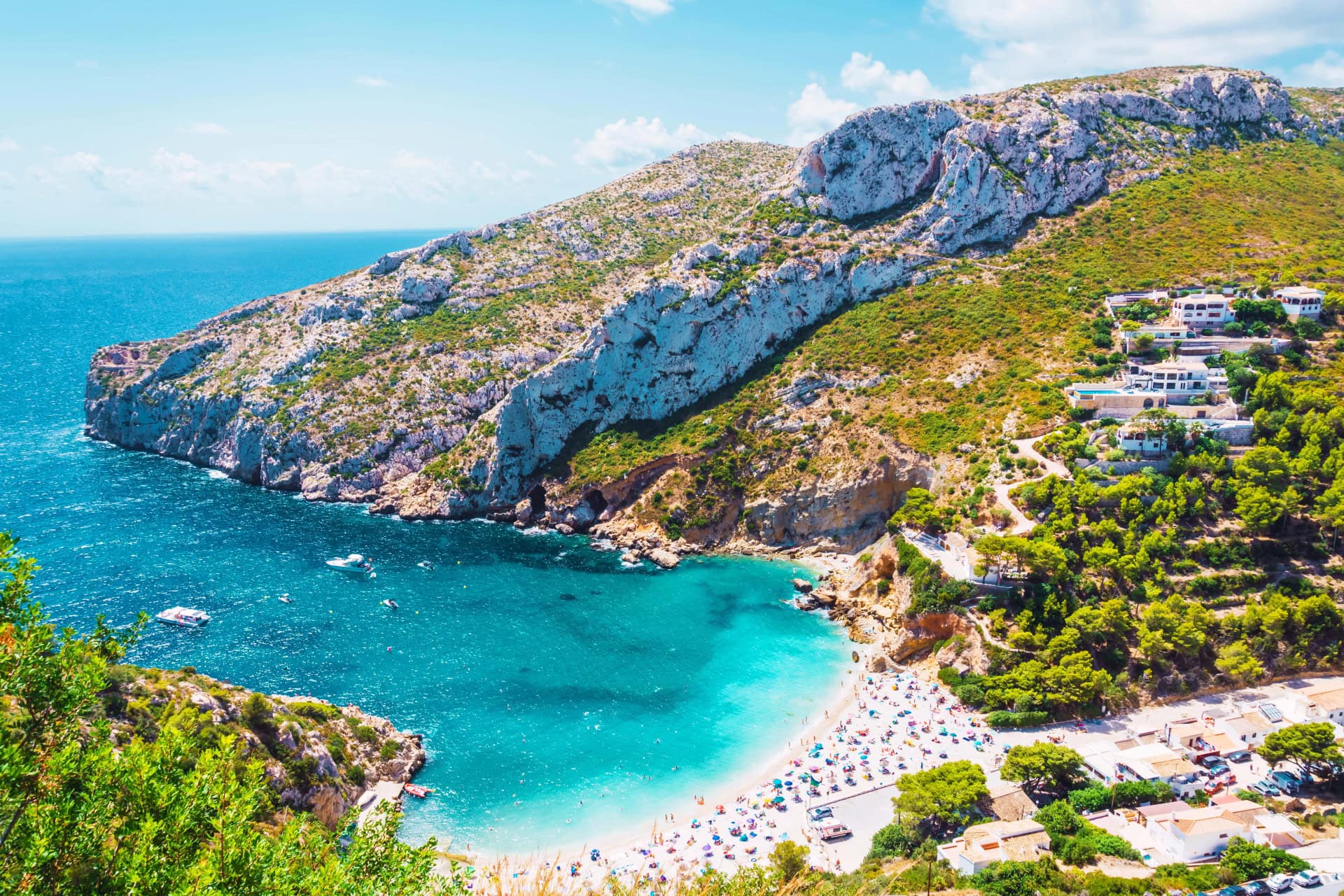
The Costa Blanca is widely regarded as one of the most popular places to spend the winter in Spain. The coastline of Alicante province is known for its many hours of sunshine and mild winters. There is also plenty of variety, from larger, lively seaside resorts to smaller coastal towns and traditional Spanish villages.
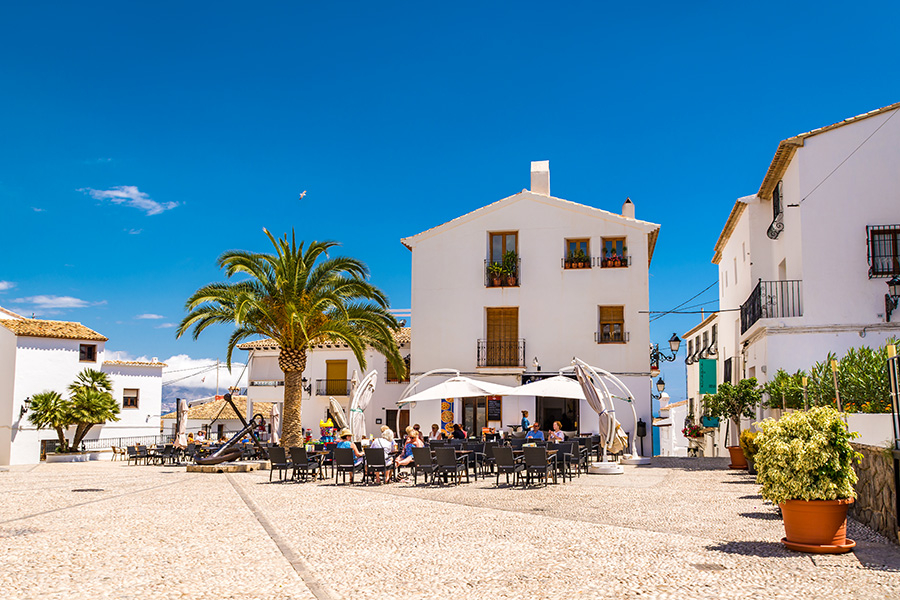
Benidorm, for example, remains lively throughout the winter. If you prefer somewhere quieter, towns such as Moraira, Jávea, Altea and Dénia are worth exploring. Many local amenities remain open all year round, and on sunny winter days, you can enjoy lunch outdoors, go for a walk or explore the area by bicycle.
Another advantage is accessibility. With Alicante Airport and a large international community, the Costa Blanca is particularly well suited to people who spend part of the year in Spain.
2. Costa Valencia

Just north of the Costa Blanca lies the Costa de Valencia, the coastline of Valencia province. Here, a mild Mediterranean climate meets wide sandy beaches, nature, culture and, of course, the city of Valencia. This region is particularly appealing to those who enjoy having plenty to see and do. Valencia is a lively city throughout the year, with restaurants, museums, shops, markets and cultural events. At the same time, both the beach and the countryside are within easy reach.
There is plenty to discover outside the city, too. Explore Port Saplaya, the Sierra Calderona Natural Park or coastal towns such as Cullera and Gandía. Further inland, destinations such as Chulilla offer beautiful walking and hiking opportunities.
Winters here are generally mild, although evenings can be chilly. One of Valencia’s greatest advantages is that it isn’t simply a seasonal destination. The city remains lively all year round.
3. Costa del Sol

The name says it all: the Costa del Sol is famous for its sunshine. This stretch of southern Spain’s coastline is particularly attractive outside the hot summer months. Places such as Málaga, Marbella, Estepona and Benalmádena remain lively during winter. The Costa del Sol is also popular among golf enthusiasts, with an extensive selection of golf courses, restaurants, beach clubs and other amenities that remain open for much of the year.
There are plenty of opportunities for day trips, too. Málaga itself is well worth exploring, while cities such as Granada, Córdoba and Seville make excellent destinations for discovering more of Andalusia. And if you fancy a complete change of scenery, you can even head to the ski slopes of the Sierra Nevada, which are within driving distance.
4. Costa Calida
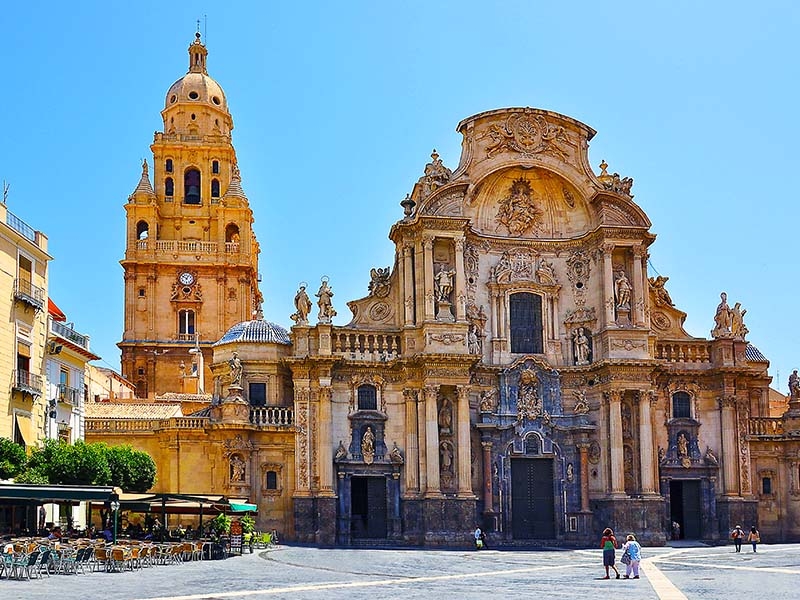
The Costa Cálida is located in the Murcia region, immediately south of the Costa Blanca. With its mild and relatively dry climate, it is another attractive destination for spending the winter in Spain. Popular locations include the area around the Mar Menor, San Pedro del Pinatar and Los Alcázares, as well as Mazarrón and Águilas further south. Compared with certain parts of the Costa Blanca and Costa del Sol, the Costa Cálida often has a quieter, more traditional Spanish atmosphere.
This can be a real advantage if you are looking for peace, outdoor living and a less tourist-oriented environment during the winter months. However, bear in mind that smaller coastal resorts can become considerably quieter outside the main tourist season.
5. Canary Islands
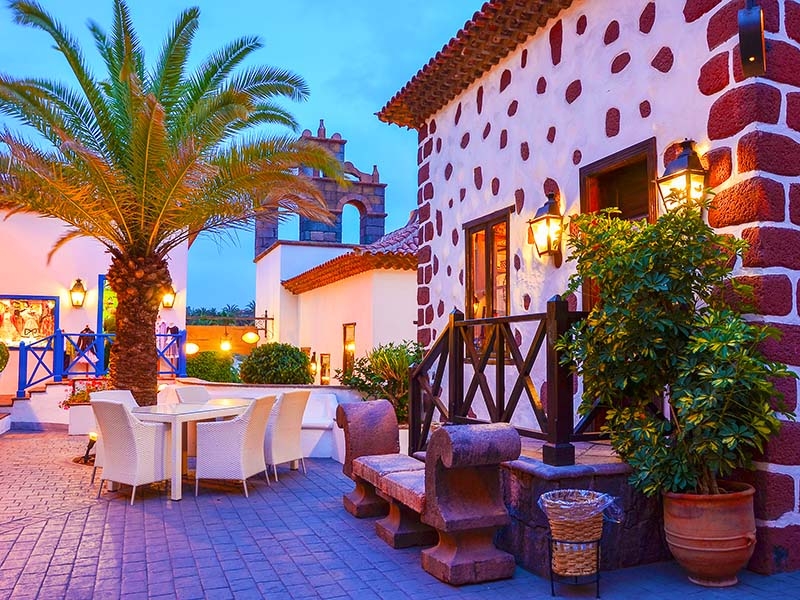
If warmth is your main priority, the Canary Islands are difficult to beat. Winter temperatures are often around 20°C during the day, and the climate remains relatively stable throughout the year.
Tenerife and Gran Canaria are excellent options if you enjoy having plenty of amenities, restaurants and entertainment nearby. Fuerteventura and Lanzarote are particularly attractive for their beaches, open spaces and extraordinary volcanic landscapes. Smaller islands, such as La Gomera, have their own distinctive character.
The main difference compared with mainland Spain is, of course, island life. You can’t simply jump in the car and drive to another region, although inter-island ferries and flights make exploring the archipelago possible. Depending on where you are travelling from, reaching the Canary Islands may also involve longer flights or additional connections compared with mainland Spain. If you are considering spending an extended period here, it is worth exploring the different islands and locations before deciding which one best suits your lifestyle.
What should you look for when buying a property to spend the winter in Spain?
Choosing the right region is one thing, but the property itself can feel very different in January compared with a viewing in July.
If you are planning to spend your winters in Spain regularly, there are a few things we recommend paying particular attention to.
Sun exposure
A sunny terrace can make all the difference during winter. A south-facing or southeast-facing property will often receive more direct sunlight during the colder months. When viewing a property, don’t just focus on the views. Consider when and where the sun reaches the terrace, garden and interior of the house.
Heating and insulation
Even in Spain, temperatures can drop considerably at night. Check how the property is heated and look for features such as double glazing, proper insulation and air conditioning with a heating function. Older Spanish properties, in particular, can feel surprisingly cold indoors during winter.
Year-round amenities
A lively promenade full of restaurants in August may look very different in January. Find out which amenities remain open throughout the year, including supermarkets, restaurants, shops, medical facilities and sports centres.
Accessibility
If you plan to travel to and from Spain several times a year, the distance to an airport can be important. Check the availability of flights during winter, not just during the summer holiday season. Depending on your departure location, direct flights may be limited at certain times of the year.
Outdoor space
A terrace or garden is a wonderful addition to any Spanish home, especially during winter. However, protection from the wind can be just as important as the amount of outdoor space. A sunny, sheltered terrace can make it possible to spend many winter afternoons outdoors, even in January.
Frequently asked questions about spending the winter in Spain
Where is the warmest place in Spain during winter?
The Canary Islands are generally the warmest Spanish destination in winter. On average, temperatures there are around 20 degrees. On the Spanish mainland, the mildest winters are found mainly along the southern and south-eastern coasts.
Where is the best place to spend the winter on the Spanish mainland?
The Costa Blanca, Valencia and the Costa del Sol are popular choices because of their mild climate and the number of sunny days. Which region is best for you also depends on how much hustle and bustle, amenities and international residents you want around you.
Is Valencia a good place to spend the winter?
Absolutely. Valencia has mild winters and, as a major city, has the advantage that restaurants, shops, cultural attractions and other amenities are open all year round. It’s a particularly good choice for those who, whilst spending the winter there, are not just looking for sun and beaches, but also want to stay in a lively environment.
Where are there still plenty of things to do in Spain in winter?
Absolutely. Valencia has mild winters and, as a major city, has the advantage that restaurants, shops, cultural attractions and other amenities are open all year round. It’s a particularly good choice for those who, whilst spending the winter there, are not just looking for sun and beaches, but also want to stay in a lively environment.
Larger cities and towns with large permanent populations are usually livelier than typical summer destinations. Valencia and Málaga are good examples of this. Along the Costa Blanca, too, several larger seaside resorts and popular residential areas remain bustling all year round.
Buying a property to spend the winter in Spain
Finding the right region is a very personal choice. Some people want as much winter sunshine as possible, while others prefer a lively city, peace and quiet, nature, golf courses or somewhere with plenty to see and do all year round.
Are you considering buying your own property in Spain to spend your winters? Tell us what you’re looking for, your budget and what’s important to you when choosing a location. With our free Property Finder Service, we’ll help you find a property and region that match your wishes.