PROPERTY SEARCH
Mortgage in Spain for International Buyers: 2026 Guide
Thinking about buying a property in Spain but need a mortgage to make it happen? International buyers can obtain a Spanish mortgage, even if they live and earn their income outside Spain. The amount you can borrow, however, usually depends on your residency status, income, existing debts and the value of the property.
Dream Properties International can introduce you to an experienced independent mortgage adviser who works with international buyers and Spanish banks.
Would you like to find out straight away what options are available to you? Feel free to get in touch for a no-obligation chat and receive personalised advice from an English-speaking mortgage expert in Spain. Alternatively, use our free mortgage calculator to work out your potential monthly payments in one go.
What you need to know about a mortgage in Spain:
✔ Non-resident financing: up to approximately 70% of the lower of purchase price or valuation
✔ Typical term: around 20–25 years for non-residents, depending on lender and age
✔ Repayment: usually monthly capital-and-interest repayments
✔ Documents: passport, proof of income, tax returns, bank statements and home-country credit report
✔ Affordability: total monthly debts are commonly limited to approximately 35% of net regular income, although lender criteria differ
✔ Cash required: the deposit plus purchase taxes and expenses, often meaning a non-resident needs roughly 40–45% of the property price available in cash
Can international buyers get a mortgage in Spain?
When taking out a mortgage for a home in Spain, you have to take into account a number of preconditions. For example, the maximum maturity for a mortgage is 75 years, the maximum term is 25 years and you repay the mortgage by means of an annuity mortgage. The specialist can of course tell you everything about the mortgage and the conditions.
Dream Properties International works together with independent mortgage advisors in Spain that can speak your language. They have over 20 years of experience in the field of mortgage advice and are in direct contact with the major national and international banks. This mortgage advisor can fully inform you about the financing and mortgage of your house in Spain and offers plenty of personal guidance during the further process. Even after closing the mortgage. In addition to extensive information about financing, the specialist will also look for the best conditions for you in the case of renovation and new construction.
Curious about your financing options? Contact us and we will be happy to help you!
Required documents for a mortgage in Spain
Before you start applying for your mortgage, it is wise to collect the necessary documents. This way the advisor can quickly start to determine the amount of the mortgage for your house in Spain. But which important documents are part of the mortgage file?
When you work in paid employment:
- Pay slips for the past three months
- Most recent tax return
- Extract from BKR (NL) or extract from the Central Individual Credit Register (Belgium)
- Bank mortgage statement for your own home
- All account statements from the past six months
When you work as a self-employed person:
- Two most recent annual accounts
- Two most recent tax returns
- Extract from BKR (NL) or extract from the Central Individual Credit Register (Belgium)
- Bank mortgage statement for your own home
- Bank statements for the past three months
- In case of rental income, all rental contracts
How much can you borrow to buy a property in Spain?
For international buyers purchasing a property in Spain, the following guidelines generally apply:
- Non-residents: a mortgage of up to around 70%.
- Residents (living in Spain with a local income): up to 80% in some cases.
Example:
Buying a property for €400,000? You may be able to borrow up to around €280,000, meaning you will need to contribute €120,000 of your own money, plus purchase costs.
The amount you can borrow depends on two factors:
- Loan-to-Value (LTV): for non-residents, usually up to 70% of the purchase price or appraised value, whichever is lower.
- Debt-to-Income (DTI): banks often expect your total monthly debt repayments, including your mortgage, to stay within 30–35% of your net income.
Want to find out how much you could borrow to finance a property in Spain?

Purchase costs and additional expenses
When buying a property in Spain, you will need to budget for additional costs on top of the purchase price. These typically amount to 13 – 15%:
- Property transfer tax (ITP), or VAT (IVA) for new-build properties
- Stamp duty (AJD)
- Notary and Land Registry fees
- Legal fees
- Mortgage-related bank charges, such as valuation and arrangement fees
Important: these costs cannot be included in your mortgage. You will therefore always need funds of your own. Keep in mind that if the property valuation comes in lower than expected, you may need to contribute more of your own money.
Example calculation
- Purchase price (resale property)
- €300,000
- Estimated purchase costs (13–15%)
- €40,000
- Mortgage
- €210,000
- Your own funds (30% deposit + purchase costs)
- €130,000
As you can see, you need to set aside sufficient funds of your own to cover the additional purchase costs as well as your deposit.
Step by step: from application to completion
- Initial consultation and advice → discuss your plans and assess how much you can borrow.
- Submit your application to the bank → the bank reviews your documents.
- Property valuation → required when financing your purchase with a mortgage.
- FEIN → a binding mortgage offer setting out all the terms, with at least 10 days to review and compare before signing.
- Mortgage offer → sign the offer with the bank.
- Signing at the notary → complete the property purchase and arrange registration of the mortgage.
Would you like a detailed explanation of the entire process? Read our page about the property buying process in Spain.
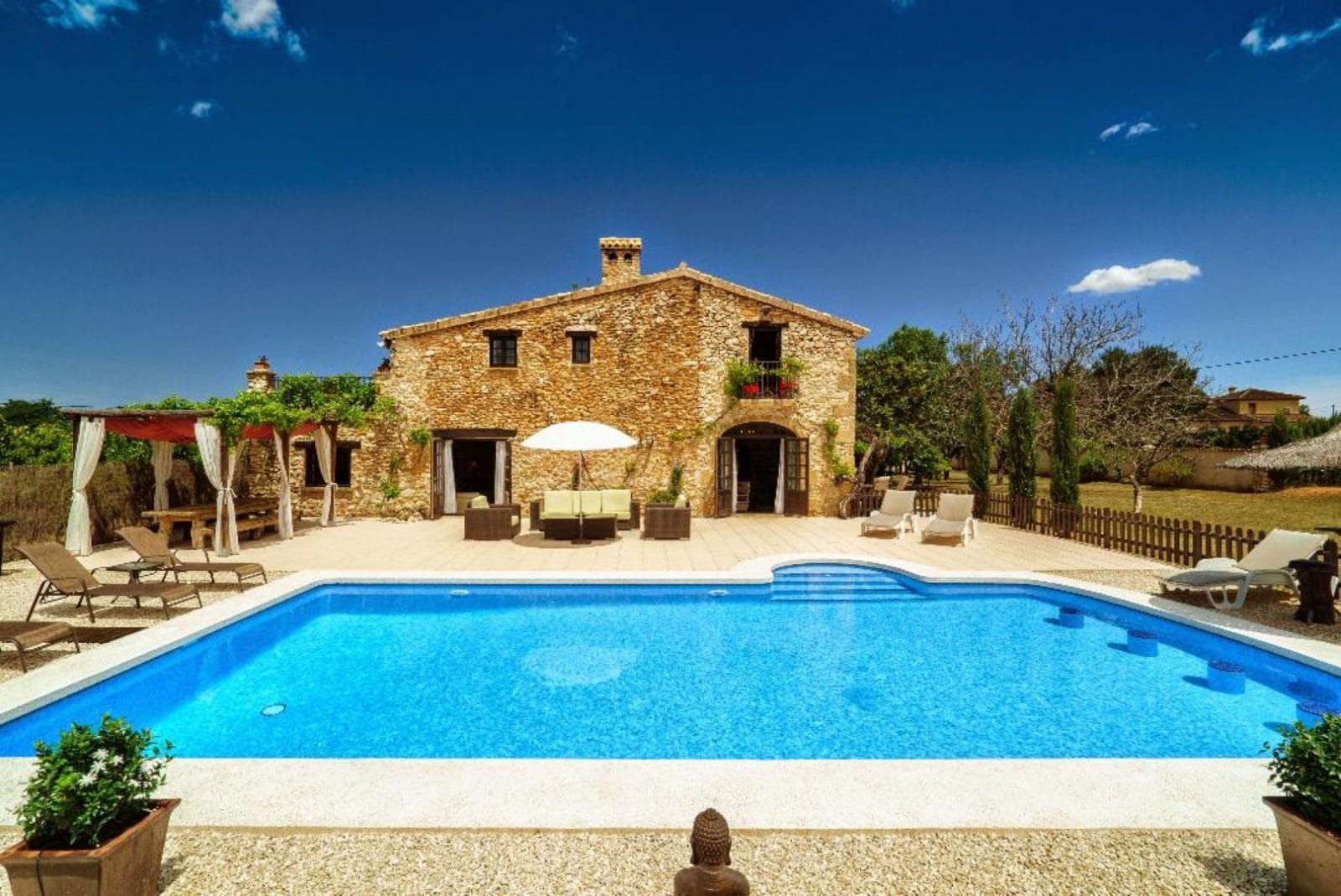
Financing a finca rústica in Spain
Stricter lending criteria often apply to rural homes or farmhouses (fincas rústicas). Spanish banks consider this type of property a higher risk because it can be more difficult to resell.
- Maximum financing is often lower, for example 50–60% of the appraised value or purchase price, whichever is lower.
- Not all banks offer mortgages for a finca rústica.
- Additional documentation confirming the property’s condition and legal registration may be required, such as an escritura de obra nueva (a deed declaring a building or extension).
Planning to buy a finca? Bear in mind that you will generally need to contribute a larger proportion of your own funds than when buying an apartment or a new-build home.
Frequently asked questions about a mortgage in Spain
How much can I borrow as a non-resident in Spain?
What is the maximum mortgage term and age limit in Spain?
The maximum mortgage term is usually 25 years, with repayment generally required by around age 75. The minimum term is typically 10 years, which can make obtaining a mortgage more difficult from age 65 onwards.
What documents do I need for a mortgage in Spain?
Identification, your NIE number, proof of income, bank statements, a credit report from your country of residence, the purchase contract and a property valuation.
Can I include purchase costs in my mortgage?
No. You will need to cover these costs with your own funds.
How does a mortgage work for a new-build property in Spain?
When buying a new-build property in Spain, you make stage payments during construction, but the mortgage funds are only released at completion. You will therefore need to fund the earlier payments yourself.
A typical payment schedule is:
- 10% as a reservation payment or deposit when signing the purchase contract.
- 20–30% in one or more stage payments during construction.
- The remaining balance, often 60–70%, at completion and transfer of ownership before the notary.
Can I use equity in my current home to buy a property in Spain?
Yes. You can use savings or funds released from your current home as your deposit. The Spanish bank will generally require the money to be available in your account. Any additional borrowing will also increase your monthly financial commitments, which may reduce the amount you can borrow in Spain.
Can I rent out my Spanish property if I have a mortgage?
It may be possible to rent out your property while you have a mortgage. You will need to check your mortgage terms and the applicable rental regulations. Holiday rentals may also require a licence or registration, depending on the location and property.
What are the costs of a Spanish mortgage?
The costs may include a property valuation, a bank arrangement fee and any mortgage adviser fees. The exact amount depends on the lender and your circumstances. You should also budget separately for the taxes and other costs associated with buying the property.
Can I get a mortgage in Spain if I am self-employed?
Yes, although banks generally require more extensive financial documentation, including annual accounts and tax returns. We help many business owners and expats navigate this process.
We’re here to help
Dream Properties International works with an independent, English-speaking mortgage adviser in Spain with over 20 years of experience and direct relationships with major Spanish and international banks. Our mortgage partner explains your options for financing a property in Spain and provides personal guidance throughout the process, even after your mortgage is in place. They can also help you find suitable financing terms for renovation projects and new-build properties.
Curious about your financing options? Get in touch with us. We’ll be happy to help!
Mortgage advice in Spain
By submitting this form, you confirm that you agree to our website terms of use, our privacy policy and consent to cookies being stored on your computer.