What is the best place to buy a house in Spain? It’s a question we’re often asked by people looking to buy a home under the Spanish sun.
The honest answer is that there isn’t just one best place to buy a house in Spain. Spain is a vast and diverse country, with regions that differ greatly in terms of climate, price levels, atmosphere and the type of properties available.
Table of Contents
Popular regions for buying a home in Spain
Are you looking for a second home near the coast, a flat in a lively city, or perhaps a quiet villa in the countryside? This makes a big difference when deciding on the right region.
In practice, however, we see that international buyers – particularly those from the Netherlands and Belgium – often opt for a number of specific areas. Below is an overview of regions that are popular with foreign buyers.
Costa Blanca
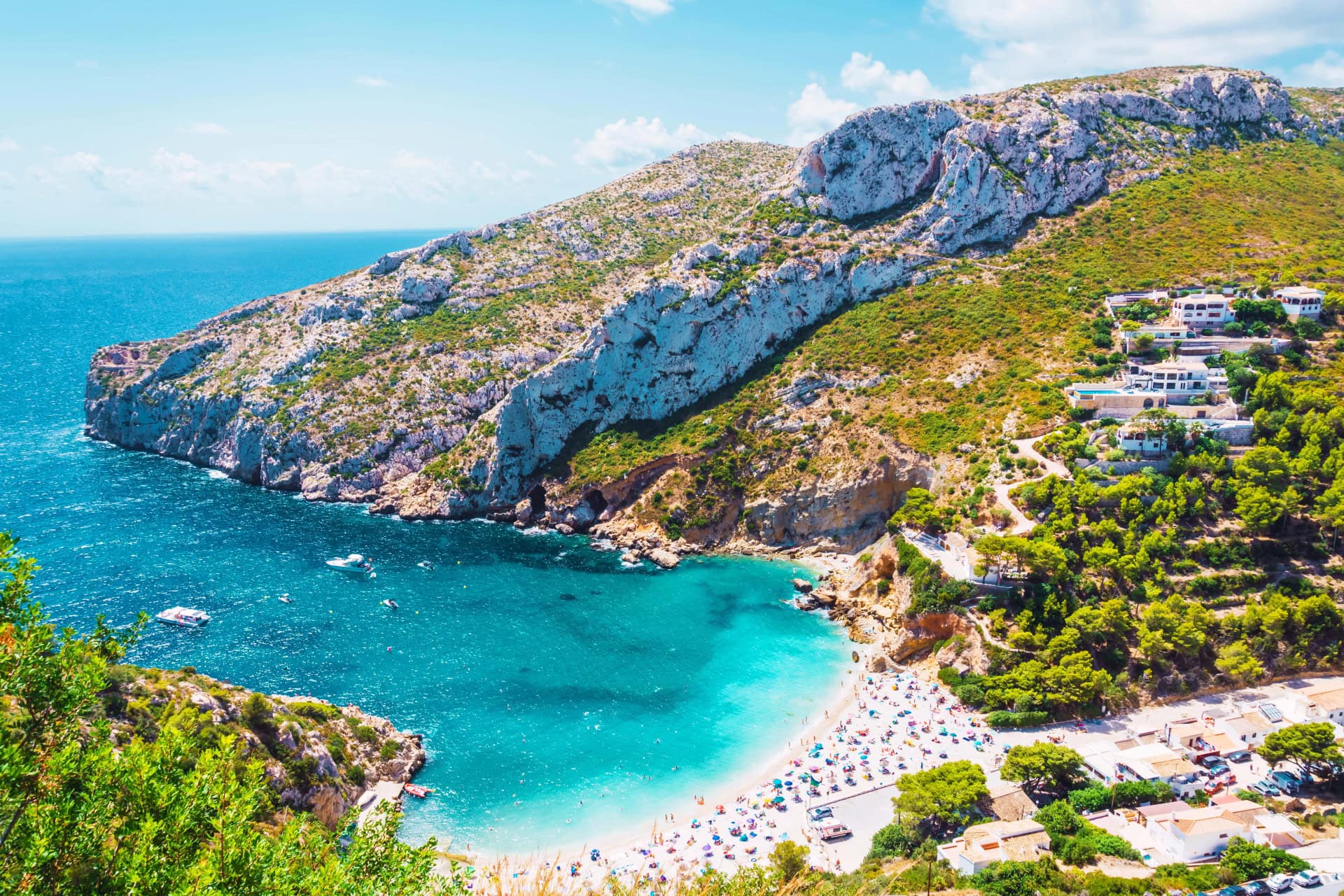
The Costa Blanca is one of the most popular regions among Dutch and Belgian buyers. This area is located in the province of Alicante and is known for its long coastline, abundant sunshine and relatively affordable prices.
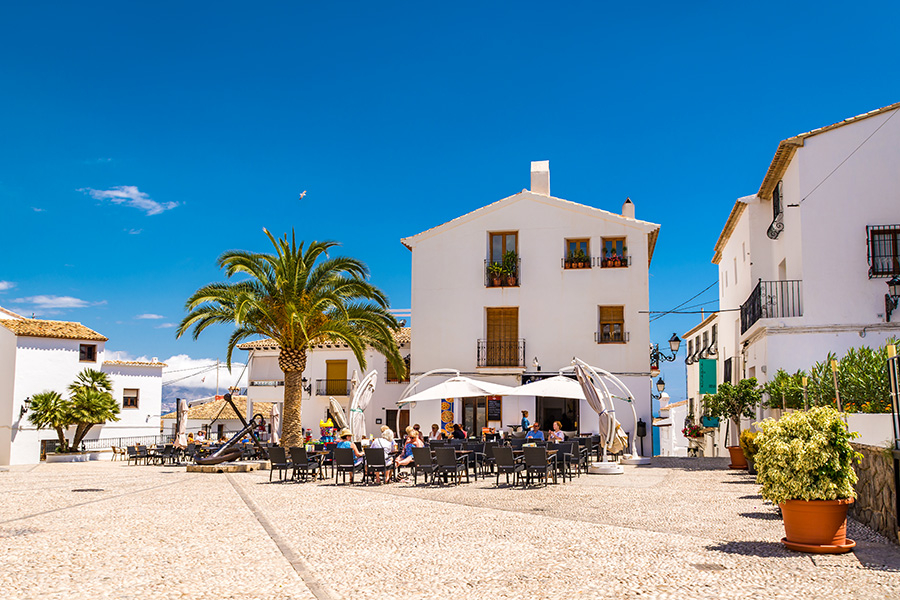
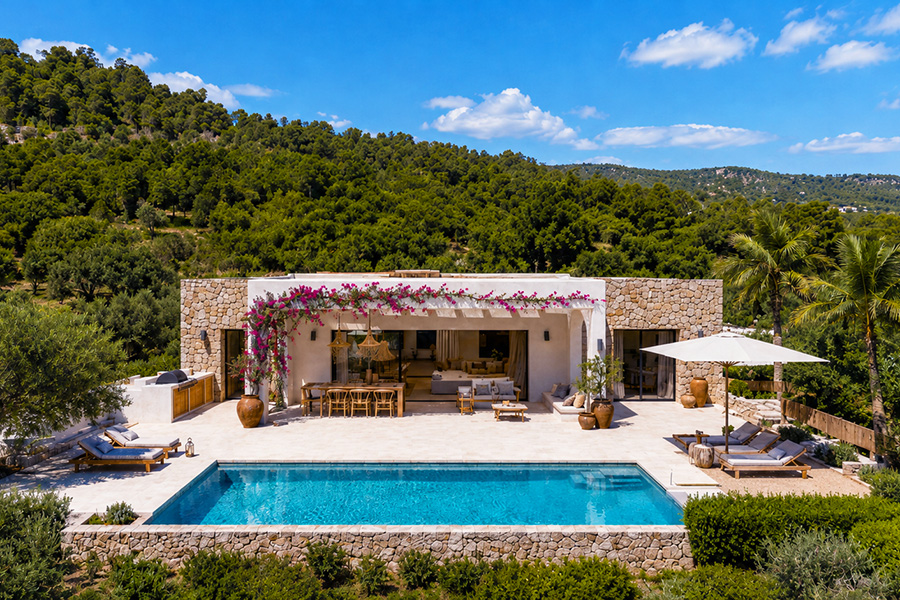
You will find a wide variety of properties here, ranging from apartments close to the beach to detached villas with swimming pools. Places such as Moraira, Jávea, Altea and Benissa are particularly popular with international buyers.
In addition, there is a wide choice of new-build developments, and amenities such as restaurants, golf courses and international schools are readily available.
Costa del Sol
The Costa del Sol is located in the region of Andalusia and is renowned for its luxury resorts, golf courses and international atmosphere. Towns such as Marbella, Estepona and Benahavís attract buyers from all over Europe.
Property prices here are generally somewhat higher than in other regions, but this is offset by a wide range of luxury homes. For those looking for an exclusive second home or a property investment, this is an attractive region.
Valencia
The Valencia region is becoming increasingly popular with international buyers. This is partly due to the combination of city life, beaches and relatively affordable prices.
Valencia is Spain’s third-largest city and is renowned for its high quality of life, excellent restaurants and wide beaches. Within the city itself, neighbourhoods such as Ruzafa, El Cabanyal and the historic city centre are particularly popular.
The Valencia countryside also offers interesting opportunities, with rural homes and villas on larger plots, surrounded by peace and greenery.
Balearic Islands (Mallorca and Ibiza)
The Balearic Islands, particularly Mallorca and Ibiza, are among Spain’s most exclusive property markets.
Mallorca offers a wide variety of properties, from apartments in Palma to luxury fincas in the interior. Ibiza is renowned for its unique atmosphere, stunning natural beauty and exclusive villas.
Prices here are often higher than on the Spanish mainland, but demand for property remains high.
Costa Calida
The Costa Cálida in the Murcia region is a lesser-known but increasingly popular coastal area. Property prices here are often still slightly lower than on the Costa Blanca or Costa del Sol.
This area offers plenty of new-build developments and a quieter atmosphere. Towns such as Los Alcázares and San Pedro del Pinatar are attracting an increasing number of international buyers.
How big is Spain compared to other countries?
Spain is a large and diverse country. Many people only realise just how vast it is when they start searching for a home.
When you look at a map, it becomes clear that Spain stretches across very different landscapes and climates. Even individual coastal regions, such as the Costa Blanca or Costa del Sol, cover large areas with many towns and neighbourhoods to choose from. Searching for property in more than one region can easily mean looking across hundreds of kilometres.
That is why the question “What is the best place to buy a home in Spain?” does not have a single answer. Each region offers a different lifestyle, climate, price level and type of property. The right location ultimately depends on your preferences, budget and what you plan to do with the home.
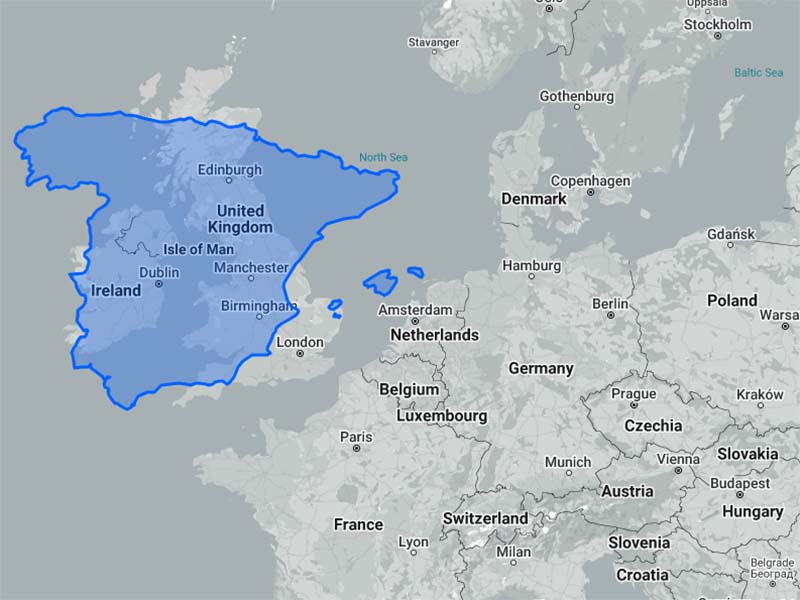
Curious to see how big Spain is compared to where you live? Visit thetruesize.com, type in ‘Spain,’ and see for yourself!
How do you choose the right location for a house in Spain?
Choosing the right location starts with determining what kind of environment best suits your plans. Consider, for example, the climate, the distance to an airport, local amenities and the purpose of the purchase.
In Spain, these factors can vary greatly from region to region. A property on the Costa Blanca, for example, feels very different from living in Andalusia or the Balearic Islands. Not only do the landscape and climate differ, but so do the amenities, accessibility and atmosphere of an area.
That is why a successful search for a home in Spain usually begins with choosing the right region. Only then do you start looking at towns, neighbourhoods and, ultimately, the property itself.
“I’m looking for a house in Spain”
We often hear people say they want to buy a house ‘somewhere in Spain’. The exact region doesn’t really matter yet. After all, Spain is sunny everywhere and feels like a holiday anywhere.
Yet in practice, things work differently. Just as there are major differences between cities and regions in the Netherlands or Belgium, the same applies in Spain. Due to the country’s vast size, those differences are even greater.
A house near the sea, for example, can feel completely different depending on the region. Even within cities, there are major differences between neighbourhoods. One neighbourhood might be lively and central, whilst another is quieter or, conversely, further out of town.
That is why it is important to think carefully about the location first before you start looking at specific properties.
The purpose of your purchase determines the best location
An important consideration when choosing a location is the purpose of the purchase. What do you intend to do with the property?
- Second home: Will you mainly be using the property as a second home for yourself? In that case, personal preferences play a major role, such as atmosphere, natural surroundings, restaurants and accessibility.
- Rental: Do you want to rent out the property (part-time)? In that case, factors such as tourist appeal, amenities and rental potential are often more important.
- Emigration: And if you plan to live in Spain permanently, other factors come into play. Consider, for example, amenities, infrastructure, international schools or employment opportunities.
By first clarifying the purpose of the property, it becomes much easier to determine the right region.
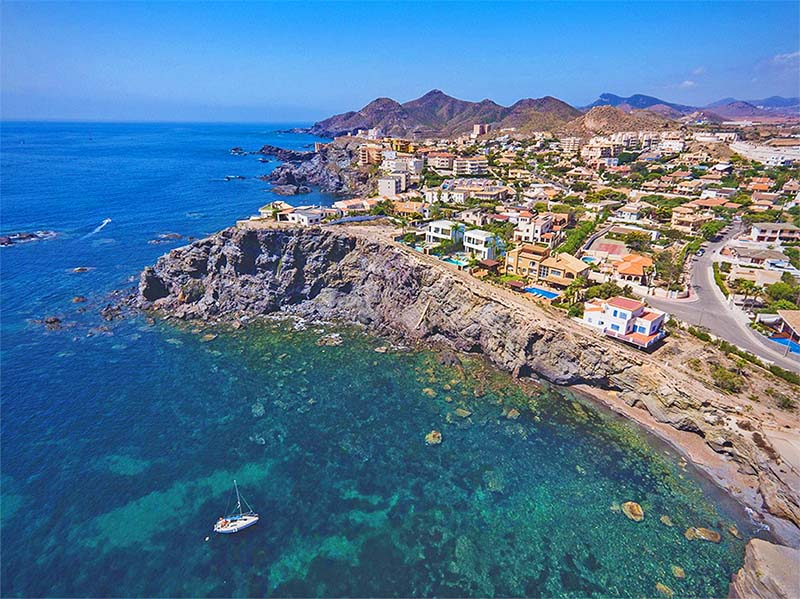
Checklist: what should you look out for when choosing a location in Spain?
Before you travel to Spain to explore different regions, there’s plenty of groundwork you can do. By clarifying your requirements and preferences for a location in advance, it becomes much easier to narrow down your search area.
So, first write down for yourself:
- what are the essential requirements for the property
- what would be a nice bonus
Once you know the purpose of your purchase and which factors are important to you, the checklist below will help you compare different properties in Spain more effectively.
- Airport nearby
Some locations in Spain are quite remote, and the nearest airport may be a two-hour drive or more away.
That needn’t be a problem if you’re moving there permanently, but it can be an important consideration if you want to visit the property regularly or rent it out.
- Public transport
Some locations in Spain are quite remote, and the nearest airport may be a two-hour drive or more away.
That needn’t be a problem if you’re moving there permanently, but it can be an important consideration if you want to visit the property regularly or rent it out.
- Water and electricity
Spain is so large that some rural areas are not fully connected to the water, sewerage or electricity networks.
Homes in these areas may, for example, use solar panels, their own water source or a septic tank. This doesn’t have to be a problem, but it is something worth knowing in advance.
- Climate
The climate varies greatly from region to region. Northern Spain is greener and wetter, whilst the east and south coasts are known for their many hours of sunshine.
There can also be differences within the same region, for example between coastal areas and the inland areas.
- Nature and scenery
Spain’s landscape is extremely varied. Some regions are green and mountainous, whilst others are flatter and drier.
Which setting is the most beautiful is, of course, a matter of personal taste. For some, a mountainous landscape is ideal, whilst others prefer to live near the sea.
- Close to sea vs. sea view
Living close to the coast doesn’t automatically mean you’re within walking distance of a beach. And a beach isn’t always a sandy one.
Sea views can also vary depending on the location. In flat areas, you often only get sea views from properties right on the coast, whereas in hilly areas you’ll find homes situated higher up with views.
- Population density
In some parts of Spain, hardly anyone lives. That might sound appealing at first, especially if you’re used to the hustle and bustle of your home country. However, it also means fewer nearby amenities and less to do.
- Seasonal areas
In addition to how many people live somewhere, it’s also good to consider that some areas are completely quiet during the winter months.
- Recreation
Hiking, cycling, water sports, golf. Everyone has a hobby or something they like to do in their free time. Then it’s quite a joy when you don’t have to spend three hours in the car to do so!
- Local amenities
Finally, it is a good idea to look into practical amenities such as:
- schools
- hospitals
- pharmacies
- supermarkets
- hardware stores
- shops
These amenities are particularly important if you are planning to stay in Spain for longer periods or to move there permanently.
The right home starts with the right location
When buying a home in Spain, we often say: we’ll find the right house, but the location has to be just right. You can renovate a home, but you can’t change its location.
That’s why it’s wise to first decide exactly which region you want to search in. With the checklist above, you can do a lot of the groundwork from home. Research different regions using search engines, YouTube videos, and maps like Google Maps.
Online communities, such as those on Facebook, can also be useful for reading about others’ experiences. Keep in mind, however, that opinions can vary widely. What’s the perfect spot for one person might be less appealing to someone else.
The best way to really get to know a region is to go there yourself. Visit different places, rent a car, and get a feel for the area. This will give you a much better idea of which location best suits your plans.
Personal advice on choosing the right region
Do you have a clear idea of what you’re looking for, but aren’t quite sure which region of Spain is best suited to your needs? We’d be happy to help you figure it out.
As a Dutch-speaking estate agent in Spain, we help buyers every day to identify the right region and find a property that matches their requirements and budget.
Please feel free to contact us to discuss your plans. We’d be happy to explore the options with you.
Do you already know exactly where you want to look? Then you can also use our property finder service, where we actively help you look for suitable properties.
Frequently asked questions about the best location in Spain
What is the best place to buy a house in Spain?
The best location depends on your preferences, budget and the purpose of the purchase. Popular regions among international buyers include the Costa Blanca, Costa del Sol and the Valencia region. Each area has its own climate, atmosphere and types of properties.
What are the most popular regions for buying a house in Spain?
The most popular regions to buy a home in Spain among international buyers include the Costa Blanca, Costa del Sol and the Valencia region. These areas combine a pleasant climate with good amenities, international accessibility and a wide range of properties.
The Balearic Islands, such as Mallorca and Ibiza, are also popular with buyers looking for more exclusive real estate.
Is it better to buy a house by the coast or inland?
That depends on what you’re looking for. On the coast, you’ll often find more amenities, beaches and a lively atmosphere. Inland, prices are often lower and you’ll find more peace and space.
How do you choose the right region to buy a house in Spain?
It is wise to first consider the purpose of the purchase. Will you be using the property as a holiday home, an investment or a permanent residence? Factors such as climate, accessibility, amenities and budget also play an important role.
Can a real estate agent help you choose the right location in Spain?
Yes. A real estate agent with experience in the Spanish property market can help you determine which regions best fit your preferences, budget and plans for the property. This makes it easier to narrow down your search and focus on homes that match your needs.